The World of Culture Salon
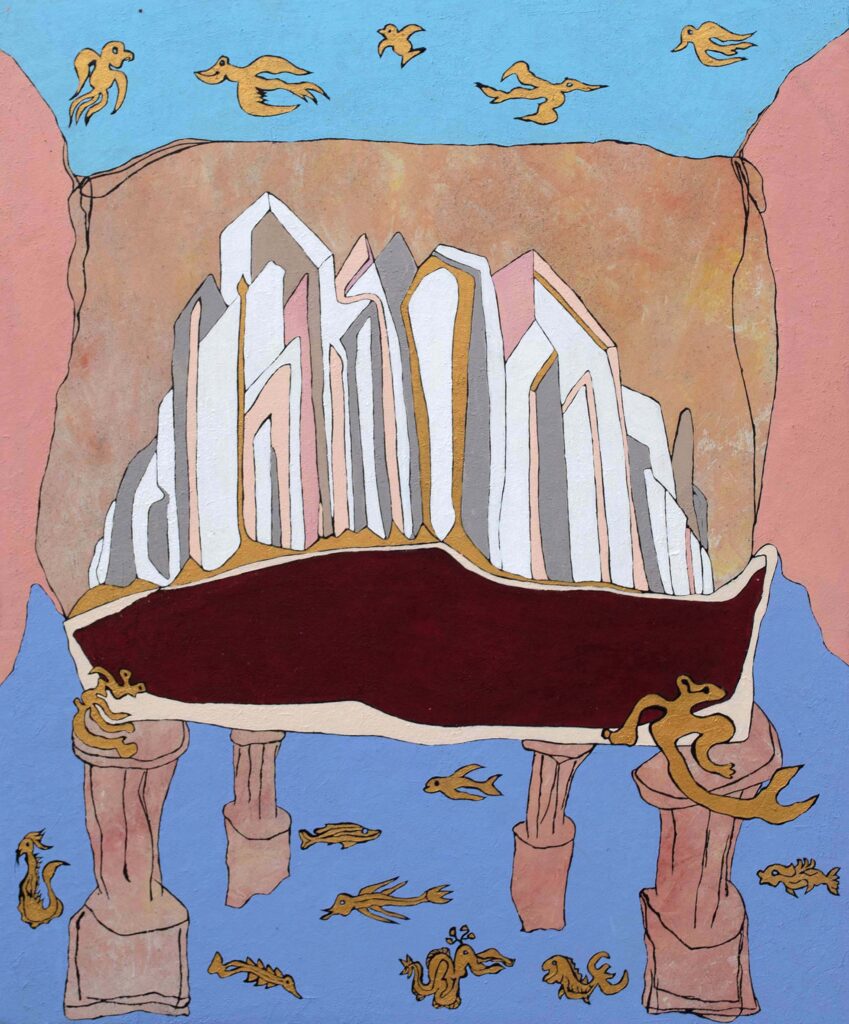
Heureux qui comme Ulysse
The title references Brassens, a French poet who extolled the virtues of making personal odysseys to find our inner truth. The anchored vessel is weighted with obelisks that once launched, could crumble and disappear into the sea. They represent our veneer as well as our fear of personal transformation, the baggage of the self, heavily stuck, yet needing new shores. Conversely, they are our solidity, our identity, our past, that cannot be eroded, even by a self-inflicted Circean glare. Yet, migration is and will always remain a personal transformation, a rebirth.Connections
The painting symbolizes the risk and loneliness of the voyage to selfhood: It also refers to existentialism, where we cannot control the external world, but have absolute control over our own judgments and choices, which can be directly traced to Greece and its philosophical schools.
It thus references the long-standing link between ancient Greece and the contemporary work, link that constantly needs to be re-stated and reinforced.